The third mark
Fifteen years after founding Frontcube, I'm rebranding it again. Same company, third mark, different person at the keyboard.
In 2010 I founded Frontcube. In 2011 I rebranded it for the first time and wrote about the logo. Fifteen years later, I'm rebranding it again. Same company, third mark, different person at the keyboard.
Here are the three marks, in order.
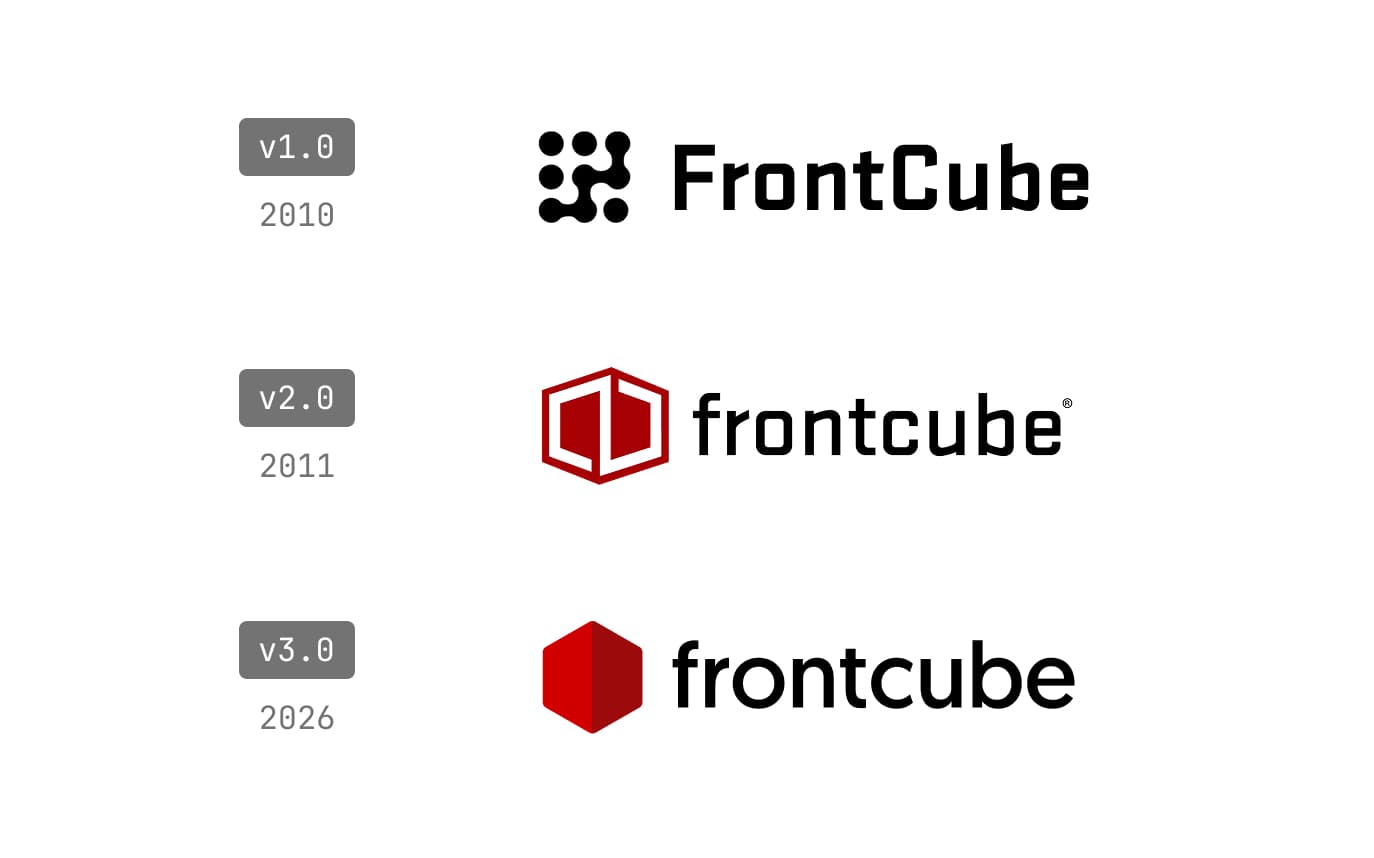
The three Frontcube marks in order. v1.0 (2010), v2.0 (2011), v3.0 (2026).
The first one was made in a hurry
I need to tell you the truth about the first mark. I didn't sit with it. I didn't ideate for weeks. I had clients lined up before Frontcube officially launched, and the mark had to exist before the contracts could go out. I gave it one sitting. Two hours, maybe three.
What I made was my attempt to combine two things I was fascinated by at the time. One was the connected-dot patterns I kept seeing in design. Bauhaus posters with their alternating circles and bridges. 37signals (one of the companies I looked up to most) using similar motifs. A whole visual language that said everything is connected if you arrange it right.
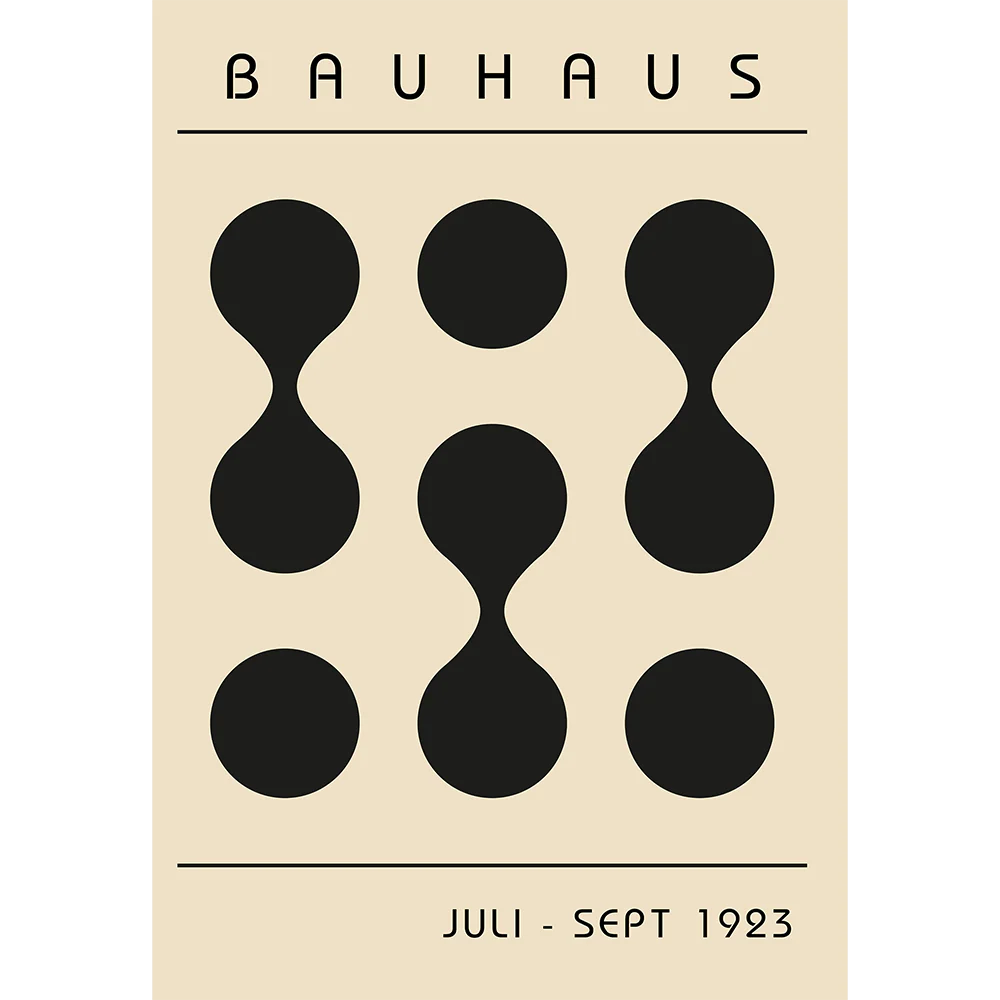
Bauhaus, July-September 1923. This is the visual language I had in my head when I sat down to draw Frontcube. Connected dots. Bridges between contained shapes. The lineage runs through 37signals and straight into the 2010 mark.
37signals. One of the companies I looked up to most in 2010, and another stop in the same connected-dot lineage.
The other was the idea of a cube. Contained, structured. A box that could hold different kinds of work inside it. I was trying to fit both into one mark on a compressed schedule. What came out was what a 25-year-old makes in an afternoon when the clock is already running. It served for a year. Then I redid it.
The second one was a statement
In 2011 I sat down and did the rebrand properly. The hexagonal cube mark I wrote about back then. Confident, bold, slightly armored. It was a statement for the founder I wanted to be. I needed the company to look bigger than it actually was, and the mark helped it do that. It worked for years. For a long stretch it was the right costume.
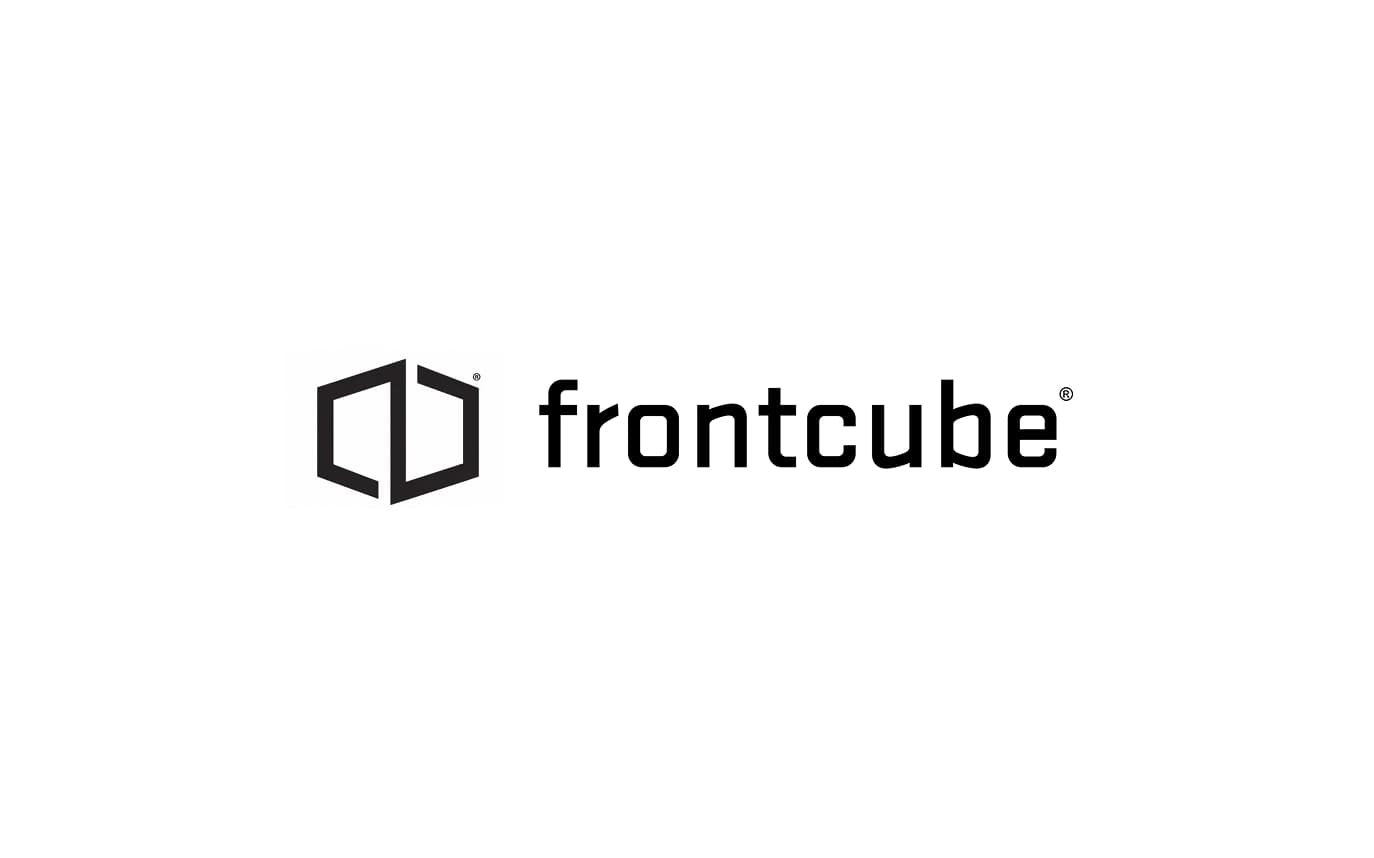
The 2011 mark. Confident. Bold. A statement I needed the company to make on my behalf.
Why now, fifteen years later
Two reasons. One is craft. The other is life.
On the craft side: between 2011 and now, almost every major brand in the world went through the same simplification. Facebook dropped the wordmark. Mastercard deleted its own name from the logo. Airbnb went minimal years earlier and everyone else followed. Burger King regressed to 1990s clarity. The cultural weather shifted. Dense, detailed marks started looking like leftover maximalism from an older decade, and the Frontcube hexagon started reading the same way. It was too loud for where design had gone, and it was too loud for where I'd gone.
On the life side, the gap is the more honest story.
The quiet years
For most of the years between the old mark and this one, Frontcube was paused. Not by accident. By decision.
I couldn't juggle Frontcube, The Smartestway, and being the father I wanted to be. So I picked the two that mattered most at that moment. Frontcube waited.
The Smartestway deserved every ounce of focus I could give it. It had a mission I believed in with real conviction. Helping students study smarter instead of harder, and, long-term, making high-quality learning accessible to a kid in Sri Lanka or Ethiopia the same way it's accessible to a kid in California. Missions that size deserve single-pointed attention. Frontcube couldn't have that, so it stepped aside.
The other side was home.
My daughters were small and I decided I was going to be there for the parts of their childhood that can't be outsourced. Putting them to sleep. Reading to them every night. Giving them their bath. Walking around the garden. Playing chess. Watching movies on the sofa.
In 1975, John Lennon stopped making music publicly for five years to raise his son Sean. He was at his absolute peak. He stopped anyway. People called it a sabbatical. He called it staying present. When he came back in 1980, the album that closed the gap was Double Fantasy, which was openly about fatherhood and domestic life and became one of his most loved records. The trade-off he made has its defenders and its critics. But it was a real trade-off, made deliberately, by someone who knew exactly what he was choosing.
I'm not comparing my work to Lennon's. I'm comparing the choice. I'm the kind of person who goes all in on whatever I'm pointed at. When the thing I was pointed at shifted from "grow Frontcube" to "be the father my daughters will actually remember," I went all in on the second thing. Same intensity. Different object. My daughters will remember these years as the years their father was there. That's the version of the ledger I wanted.
What I kept learning in private
Creative expression mostly paused during those years. I stopped writing publicly. I stopped releasing anything into the world. The technical and creative energy I had left went into The Smartestway, and almost nothing went anywhere else.
The exception was the family.
I taught myself guitar so I could play Happy Birthday for my daughters. Guitar turned into piano. Piano turned into the piece I'm releasing this month. A composition that started in a living room with two small listeners who didn't care if I got the notes wrong. I painted with the kids in the evenings. I taught them how to hold a brush and how to mix colors. Drawing evenings became a thing.
Beyond the family, those years gave me permission to explore every domain I had always wanted to explore but never had the time or the resources for. I spent a year studying the stock market. Not to trade. I've been fascinated by markets for a long time and I wanted to understand how one of the largest coordination systems humans have ever built actually behaves from the inside. Pattern recognition is my strongest instrument, and markets are one of the densest pattern environments there is. It was a workout for the muscle I use most.
What I kept noticing, across everything I touched during those years, was the connectedness. The same patterns and the same systems logic showing up in music, in markets, in how children learn, in how brands die, in how traditions survive. I am a sucker for systems thinking, and those years let me indulge it in every direction at once. Every new domain I opened turned out to be a different window looking at a very similar shape underneath.
I also finally had time for the questions about meaning and existence that had been with me since I was a child. Those questions weren't new. They had always been there. What changed was that I stopped deflecting them with work and started reading seriously across different traditions and religions, looking for answers from people who had thought about these things for longer than I had.
From the outside it looked like silence. From the inside it was the most learning I'd done in any five-year stretch of my life.
What the new mark is for
I'm redesigning Frontcube now because a few things I've been quietly building on personal time are ready to come out into the open. When I looked at the old mark in the context of what's coming next, it didn't belong. So I didn't argue with the feeling. I just redesigned it.
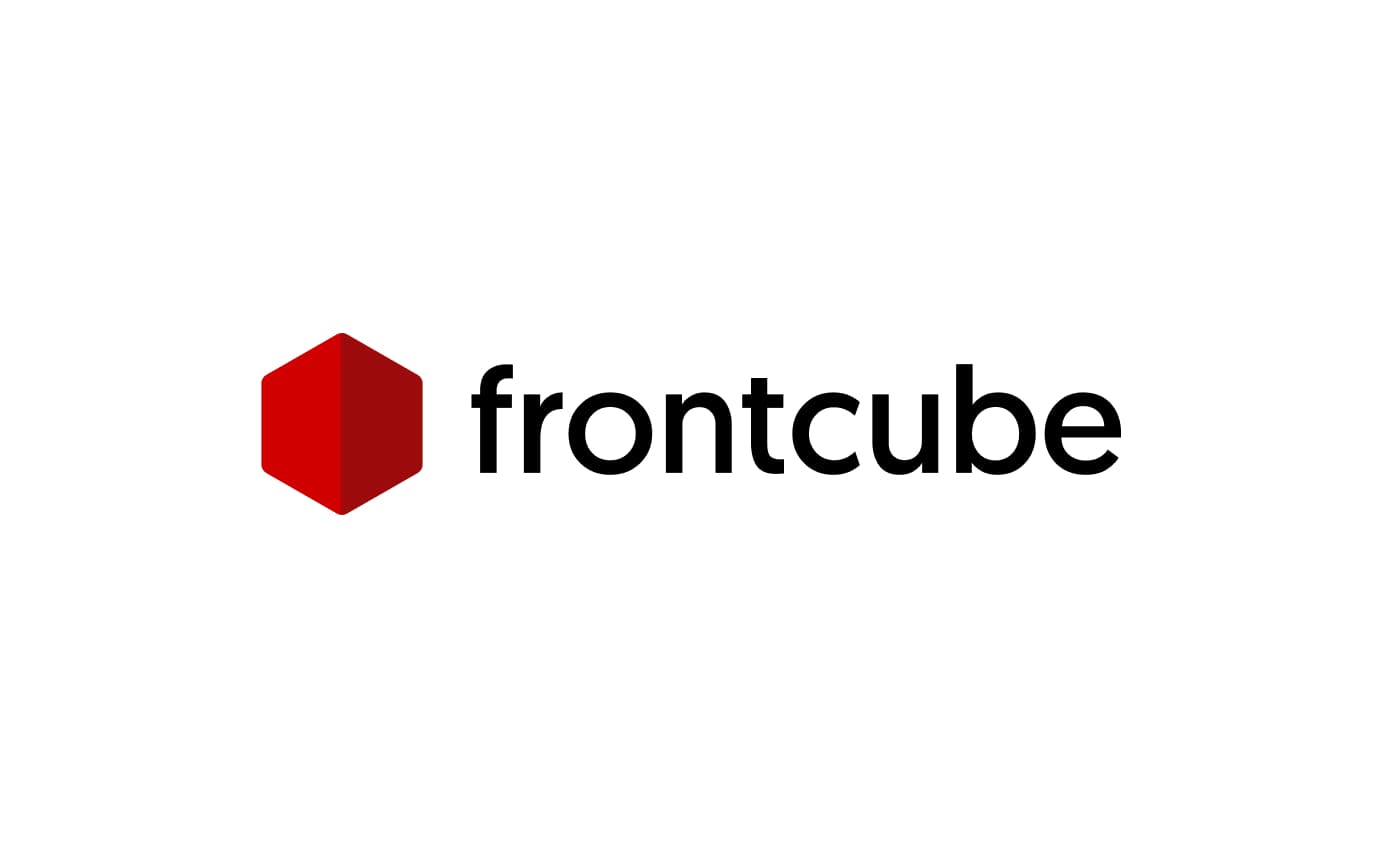
The 2026 mark. A small lowercase cube. It sits next to the wordmark almost like a footnote.
The new mark is small. It sits next to the wordmark almost like a footnote. A single simplified cube. Lowercase type. No defensiveness, no stretching, no aspiration to look larger than the company actually is. The old mark was trying to say we are a real company, please take us seriously. The new mark doesn't feel the need to say that. It trusts that the work will speak for itself.
I like it because it doesn't look like it's trying.
Closing
The first mark was a 25-year-old in a hurry, trying to combine two ideas he was fascinated by in a two-hour sitting. The second was a 26-year-old founder making a statement for who he wanted to become. The third belongs to a company that has outgrown the need to prove anything through its mark.
The first rebrand was about the founder. This one is about the company he's been quietly becoming in the background of his own life.
Keep reading
FrontCube Logo Rebranding
The story behind FrontCube's first logo redesign — finding meaning in a cube and an infinity symbol.
The Beginning of a Brand New Experience
The day I launched FrontCube, my own web consultation firm, after turning down a job to go solo.
Between your pauses
A composition about the space between presence and absence, and why silence is never empty.